
Monday, January 28, 2019
Horse Farm Property Shopping
Are you looking to purchase horse farm property? There are many items that you need to think about before you even start looking for it. Please see the link below to get you started. NC Cooperative Extension is happy to come out and help you plan your property for horses if you need us too. When you first purchase your property, its a good idea to soil sample your pastures right away, so that you know how much lime and fertilizer you need to put out. It takes lime several months to a year to break down enough for your soils to be able to use it, so you want to plan ahead as much as you can. Most Extension offices have soil kits in our offices, and many will mail the samples for you.


Monday, January 14, 2019
Rain Rot
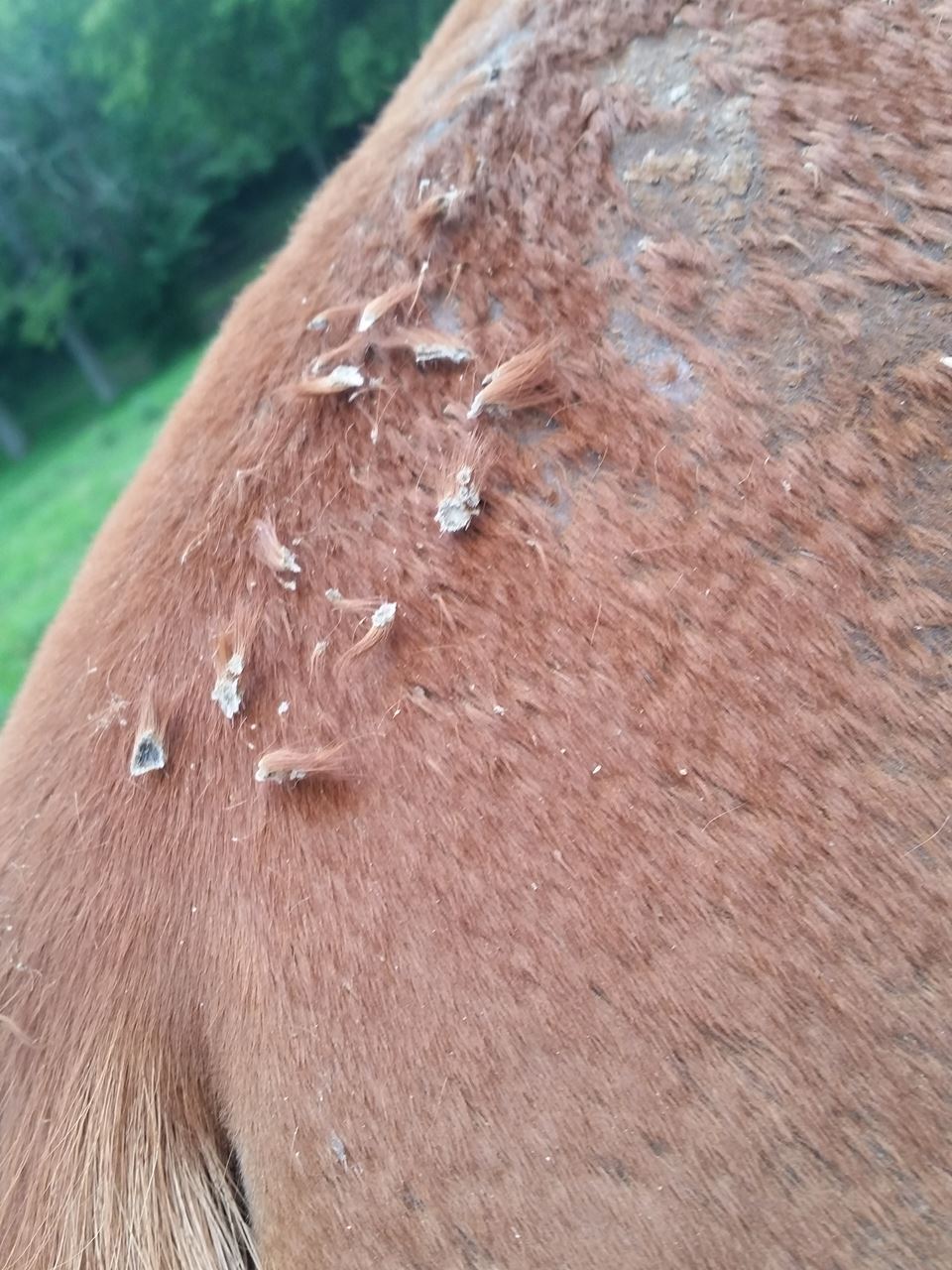 (Photo credit: mseda.org)
As we leave behind one of the
wettest years on record for NC, chances are you have at least heard the term
rain rot over the last few months. Rain
rot, aka dermatophilosis, is a skin condition that affects horses housed primarily
outside. The condition is often mistaken
for a fungal infection but is actually caused by the bacteria, Dermatophilus
congolensis. The bacteria lives dormant
on the skin of horses and under normal conditions is benign, but when the skin
becomes rain soaked or broken by either trauma or insect bites, it is more
likely to develop into the condition. A
heavy winter hair coat is more likely to hold moisture close to the skin,
causing anaerobic (lacking oxygen) conditions and exacerbating the condition.
Rain rot can usually be diagnosed
by visual inspection. The hair coat will
be in matted tufts from neck to hindquarters with lesions on the skin
underneath. Sometimes the legs will be
affected as well. If not treated promptly,
the lesions will grow and create scabs with yellow-green pus under them when
removed. Any hair attached to the scabs
may come off as well.
Treatment starts with removing the
crusty scabs to expose the infected skin to oxygen. Scab removal is usually done by bathing the
affected area in some type of antimicrobial soap (Betadine, Chlorhexidine,
etc.) and gently removing the scabs with a brush or curry comb. In severe cases, antibiotic treatment may be
required. After the skin is cleaned and
scabs removed, it is important to keep the skin dry by either housing the horse
in a barn, or if that is not possible putting on a weather proof blanket, although
this method is not preferred because it limits the amount of oxygen reaching
the skin.
Rain rot is highly contagious so
good sanitary practices should be used if you have an infected horse on your
farm. It can be transferred through
brushes, tack, and even by insects so cleaning equipment and tools and isolating
the infected horse is important in keeping this infection from spreading. You should also never share blankets between
an animal that you suspect is infected with other animals. Wash hands thoroughly after handling the
infected horse.
Mild to moderate cases of rain rot
should clear on their own, but all cases should be treated to prevent the
infection from worsening or from spreading to other horses. If you suspect your horse has a case of rain rot
and antimicrobial treatment is not effective, contact your veterinarian.
Monday, January 7, 2019
Wet Weather and Hooves
 No matter the species, wet weather can wreak havoc on
hooves. All this rain can lead to
excessive mud. And horses that stand
and/or walk in a lot of mud can have more problems with diseases like thrush
and seedy toe, also known as white line disease. Additionally, horses that stand in mud can
develop “scratches” or “greasy heels”, which is similar to what happens on the
body with rain rot.
No matter the species, wet weather can wreak havoc on
hooves. All this rain can lead to
excessive mud. And horses that stand
and/or walk in a lot of mud can have more problems with diseases like thrush
and seedy toe, also known as white line disease. Additionally, horses that stand in mud can
develop “scratches” or “greasy heels”, which is similar to what happens on the
body with rain rot.
Clean mud from the hooves every day and consider applying a
thrush medication once or twice daily.
Soft hooves on horses don’t hold nails well which can lead
to loose shoes which can lead to lost shoes. Have horses stand in a dry area
for several hours during the day or night.
Stalling with shavings, sawdust or straw can help pull some moisture out
of the hoof.
Here are some links that may provide some additional
information.
https://www.canr.msu.edu/news/scratches_in_horses
https://extension.psu.edu/horse-wet-weather-woes
If you have specific areas of the pasture that hold water,
you may need to consider grading work to improve drainage or other means to try
and eliminate these problem areas.
(Photo credit: thehorse.com)
Monday, December 17, 2018
The NC 4-H Horse Program - A Tremendous Resource for our Youth!
By Eileen Coite
County Extension Director, Sampson County
There are many learning opportunities for NC youth in the horse industry, including local 4-H and Pony Clubs, FFA, and breed organizations. Our NC 4-H Horse Program hosts many events, including clinics, contests, and shows. 4-H Horse Clubs are available in many counties. There are five 4-H districts across the state too, with many events coming up in early 2019. Take a look at our NC 4-H Horse Program website for a wealth of information on programs offered:
https://equinehusbandry.ces.ncsu.edu/equinehusbandry-nc-4-h-horse-program/
Read through the monthly newsletters to find out what's coming up and what's been going on. Check out the calendar of events. Scroll through the educational material and educational events offered. Contact your county extension 4-H or livestock agent to find out about horse clubs in your county, and how to get involved today!
County Extension Director, Sampson County
There are many learning opportunities for NC youth in the horse industry, including local 4-H and Pony Clubs, FFA, and breed organizations. Our NC 4-H Horse Program hosts many events, including clinics, contests, and shows. 4-H Horse Clubs are available in many counties. There are five 4-H districts across the state too, with many events coming up in early 2019. Take a look at our NC 4-H Horse Program website for a wealth of information on programs offered:
https://equinehusbandry.ces.ncsu.edu/equinehusbandry-nc-4-h-horse-program/
Read through the monthly newsletters to find out what's coming up and what's been going on. Check out the calendar of events. Scroll through the educational material and educational events offered. Contact your county extension 4-H or livestock agent to find out about horse clubs in your county, and how to get involved today!
Monday, December 10, 2018
Winter Water Consumption
Ensuring our horses continue to drink enough water during cold winter weather can be a tough task, but it is an important one.
Dehydration can lead to impaction colic due to decreased water intake and is certainly a problem we'd all like to a void. An adult horse needs to drink between 5 and 10 gallons of water a day to stay adequately hydrated. This time of year hay tends to be the primary source of forage so the water content is significantly less than what they get from fresh grasses, which make water intake even more important. Here are a few tips to encourage increased consumption:
Dehydration can lead to impaction colic due to decreased water intake and is certainly a problem we'd all like to a void. An adult horse needs to drink between 5 and 10 gallons of water a day to stay adequately hydrated. This time of year hay tends to be the primary source of forage so the water content is significantly less than what they get from fresh grasses, which make water intake even more important. Here are a few tips to encourage increased consumption:
- Always have fresh, clean water available, breaking the ice regularly and removing any ""chunks"" (but be sure to move those chunks outside the pasture fence or stall to avoid bruising feet)
- Horses tend drink the majority of their water within 3 hours of feeding times, so plan to provide the thawed or warmed water within that period
- Warm the water - electric trough heaters properly managed and heated buckets work well if available, or simply pouring a bucket of warm water in once or twice a day will help
- Provide access to salt or mineral blocks to improve your horses' thirst
- Adding electrolytes directly to the feed can help stimulate water consumption
- Allow access to forage 24 hours a day to keep the fermentation process of digestion continually working
- Feeding a warm mash is a quick way to add a little hydration to the diet - start with a little water and increase it a bit every day until they are accustomed to the different texture of the wet feed
Monday, December 3, 2018
So, what is quality horse hay?

This is a question that a lot of people ask and are
asked. And the answer, as so many
Extension answers are, is “It Depends”.
Of course, there are many factors that go into determining if the hay is
“good.” A previous article on the NC
Horse Blog talked about how to understand a forage report. You can find that entry here. And that is certainly the place to start when
trying to determine the quality of the hay.
Another factor is the horse that you are feeding. Different classes of horses have different
nutritional needs. Are you feeding a
“pasture ornament” or a pregnant mare or an endurance competitor? Or maybe you have some weaned foals to keep
growing. All these animals have
different nutritional requirements. And
many can be met by hay/forage.
It seems many folks think they can look at hay and tell how
good of quality it is. And this is a
good preliminary judgement. Some things
to look at are: are there weeds (or other contaminants) present; are there
seedheads or blooms present (this indicates maturity at cutting); does it smell
like fresh cut grass (or are there burnt, moldy or fermented aromas), is it low
in moisture and is it green. But,
ultimately, the true determination of quality is the chemical analysis.
At the State Fair every year, there is a forage show. You should check it out October 2019 – it’s
always in the Jim Graham building beside the restaurant. This year, one of the classes had three
entries, and the entry with the lowest visual score (based on characteristics
listed above) won the class as it was highest in protein and energy. Without the chemical analysis, you would not
know how good that hay was. In fact, the hay had enough protein to feed a
maintenance horse and breeding stallion.
It was just shy of enough protein to feed a performance horse. Additionally, the hay had enough energy to
feed a maintenance horse, breeding stallion, performance horse, broodmare, and
growing horse. And many folks would have
passed it by just after looking at it.
Below is a brief table with some of the nutritional
requirements for various classes of horses.
Table 1. Crude
protein, acid detergent fiber and neutral detergent fiber requirements for
various feeding classes of horses (expressed on a 100% dry matter basis).
Referenced from Paul Siciliano Ph.D., Assistant Professor of Animal Sciences,
Colorado State University, who is now with NC State University.
|
Feeding
Class
|
%
Crude Protein
|
%
Acid Detergent Fiber
|
%
Neutral Detergent Fiber
|
|
Maintenance
|
10
|
37-40
|
50-65
|
|
Breeding
Stallion
|
10
|
37-40
|
50-65
|
|
Performance
|
10-12
|
30-37
|
40-60
|
|
Broodmare
|
12-18
|
30-37
|
40-60
|
|
Growing
Horse
|
14-18
|
30-35
|
40-5
|
While visual inspection is good place to start, the only
true way to know the nutritional value of the hay is to have it analyzed. The NC Department of Agriculture performs
forage analysis for $10 per sample. Your
Cooperative Extension agent can help you with the sampling and the forms.
Monday, November 26, 2018
Security Around the Horse Barn
As much as we would like to be able to just tie our horses to
the trailer to watch a class at the horse show, leave the tack room open all
day for ease of access for ourselves and clients, and not worry about the
horses kept at the farm a couple of miles away, things can happen. Equipment, tack, and horses can go missing due to theft. Being careful and having a security plan in place
can prevent the loss of valuable equipment and even the loss of a horse –
otherwise known as rustling.
First the property.
Horse barn owners may want to consider placing some video cameras, or
even trail cameras, to be able to observe who is coming and going around the
barn. Conspicuous camera systems are a
good deterrent to theft, as long as they are placed where they are difficult to
tamper with. Camera can be on a wireless
network, and images/videos can be stored for later review. Cameras should have high resolution even at
night in order to be able to identify who is coming and going. They can be set to start recording when a
motion sensor it tripped to save time in reviewing and storage space.
Alarm systems can be pretty simple, or can be very
sophisticated. They can consist of infrared
beams or pressure sensors that will trigger an alarm when tripped. However, around a barn there can be animals
moving about that can cause false alarms, so set sensors so they aren’t tripped
by raccoon, dogs, or cats that may be roaming around.
If there is no one close enough to hear an alarm, it is hard to investigate
immediately, but the noise itself can be a deterrent. Be aware that alarms can be tripped
intentionally to get an idea of response.
Keep access gates and barn doors locked during hours when
there should be no one present around the barn or paddocks. If clients need to get to the barn during
off-hours, they should have a contact number to gain access. While a lock keeps honest people honest, they
also provide a measure of deterrence to would-be thieves and helps keep
valuable tack and equipment, not to mention horses, secure.
Perhaps the most important part of securing property is also
the simplest – be observant about who is coming and going any given day. Check references for a new farrier, feed
dealer, or even new clients. Ask friends
and neighbors about anything unusual that may have happened, and enlist their
help in being observant around the neighborhood. Around a busy barn, it may be easy for a
thief to grab some tack and load it into a truck or trailer, or just hitch up a
trailer and just leave without people noticing until it is too late. Again, be observant and ask everyone around the
barn to also observe what is going on.
Now for the horses. A
lot of the things mentioned above will also protect horses. Having good identification and good photos of
each horse, including distinguishing features, is very useful and can be
critical in recovering a horse that was stolen.
Many veterinarians and others recommend that horses be microchipped for
identification and most veterinarians have microchip readers that aid in
getting horses back to their owners. Freeze branding is an outward means of identifying
horses and will deter theft is there is an obvious identifying mark that is
registered to a farm or ranch. Several states record brands for identification purposes.
Horses have been stolen from horse shows and other places
off the farm. As was stated earlier, we
should be able to tie a horse to the trailer for a short time while watching a
class at a horse show without worrying about someone untying the lead rope and
walking away with the horse, but this does happen. Be security conscious when at horse shows,
trail rides, or other equine events and take turns watching the classes while
someone keeps an eye on the tack and the horses. Being good neighbors while at an event helps
keep everyone’s property safe and secure.
These are just a few things to consider in making sure that
horses tack, and equipment stay where they are supposed to be. Have conversations with family, friends, and
neighbors and get other ideas to consider that won’t break the bank, yet will
provide a measure of security around the farm and at events. Implementing a few security measures is less
expensive and less painful than replacing equipment or dealing with the loss of a
favorite horse.
Subscribe to:
Posts (Atom)