We are probably not too far from a lot of foals hitting the
ground. Here is a good article about
some things to consider when you have a pregnant mare. As always, have a good working relationship
with your veterinarian.
Monday, March 4, 2019

Monday, February 11, 2019
Why Install an Equine Dry Lot?
Managing horses on small
acreage can be challenging. One of the
challenges often faced is the need for grazing but being limited on space. Dry lots can serve many purposes but the main
purpose is to have somewhere to confine horses when pastures need time to rest
and regrow. It is important to consider
grading and footing when thinking about putting in a dry lot. Without the proper grade and footing layers,
the dry lot will not stand the test of time.
What is an equine dry lot?
•
A small sacrifice
area (usually free of vegetation) where shelter, feed, and water are located to
house horses when they need to come off pastures.
•
Other Purposes:
•
Exercise/Turnout
from Stall
•
Injury Recovery
•
Managing
Metabolic Issues

Before dry lot footing was added.

After dry lot footing was added.
Dry Lot Overview
•
Location: Near
Barn/Shelter
–
Think central
location to all pastures (for shelter, water, feed)
•
Size: min. 400
sq. feet (20 ft. x 20 ft.) for one horse
•
Cost for 20 ft. x 20
ft. Dry Lot:
–
Low End ~$1,000* (6 in. of screenings/rock dust)
–
High End ~$2,300* (geotextile fabric, 6 in. drainage stone, 6 in. screenings/rock dust)
*Prices are estimates and will vary depending on your area.
Dry Lots = Better Pastures and Healthier Horses
•
Manage horses on
high density farms (boarding/training facilities)
•
Utilize
rotational grazing
•
Manage turnout
time
•
Prevent trampling
when soil is too wet
•
Recovering from
injury and need limited (safe) space
•
No mud!! Mud causes injury (it’s slippery), thrush,
parasites, abscesses, and more
•
Properly managed
pastures can reduce hay cost by ~$60-$100/month!

For more information about
equine dry lots and construction tips, please contact your local Extension Agent
for advice.
Monday, February 4, 2019
Wet Weather Can Lead to Hoof Issues
It seems like since Hurricane Florence hit in September we have not had a break from wet weather. Thrush is commonly associated with wet conditions and poor management. It can be seen in horses who are allowed to stand in paddocks, run-in sheds, or stalls that have excessive manure and moisture. It can also occur in horses who do not get their feet cleaned out regularly. However, thrush can be seen in horses who are never allowed to stand in manure.
Thrush usually occurs within the frog (the wedge-shaped soft structure of the hoof) and the sulci (the grooves next to and in the middle of the frog). It is caused when excessive dirt and debris get trapped around the frog creating a perfect environment for anaerobic bacteria and fungi. Thrush is characterized by having a strong pungent odor along with a thick black or grey discharge/decaying tissue being present when picking out your horse's feet. The frog will be softer and sometimes tender to touch. If thrush is left untreated it can get into the sensitive tissues in the foot causing lameness similar to that caused by an abscess.
Thrush can be prevented by picking out your horse's feet on a regular basis. It will also help to keep manure picked up and the area dry where your horse may stand for an extended period of time, such as a stall or run-in shed.
The bacteria and fungi that cause thrush are not hard to kill so an antiseptic, such as betadine, can be used. Another option is to use a copper sulfate solution. Follow label instructions for the length of time to treat the infected frog.
Thrush is a disease that is common when conditions are wet, but with proper management can be prevented. You can always contact your veterinarian and/or farrier if you have questions about diagnosing and treating this disease.
Friday, February 1, 2019
NC Equine Passport Program Discontinuation
The NC Equine Event Passport Program (through the NCDA&CS) will be discontinued as of Dec 31, 2019. It will be replaced by the Extended Equine Certificate of Veterinary Inspection (EECVI) Program. This is essentially a 6 month health certificate that is recognized by 35 states and is an ideal program for those who have horses traveling/competing frequently. To find out more information, please check out the FAQ tabs on the website at https://www.ncagr.gov/vet/
Monday, January 28, 2019
Horse Farm Property Shopping
Are you looking to purchase horse farm property? There are many items that you need to think about before you even start looking for it. Please see the link below to get you started. NC Cooperative Extension is happy to come out and help you plan your property for horses if you need us too. When you first purchase your property, its a good idea to soil sample your pastures right away, so that you know how much lime and fertilizer you need to put out. It takes lime several months to a year to break down enough for your soils to be able to use it, so you want to plan ahead as much as you can. Most Extension offices have soil kits in our offices, and many will mail the samples for you.


Monday, January 14, 2019
Rain Rot
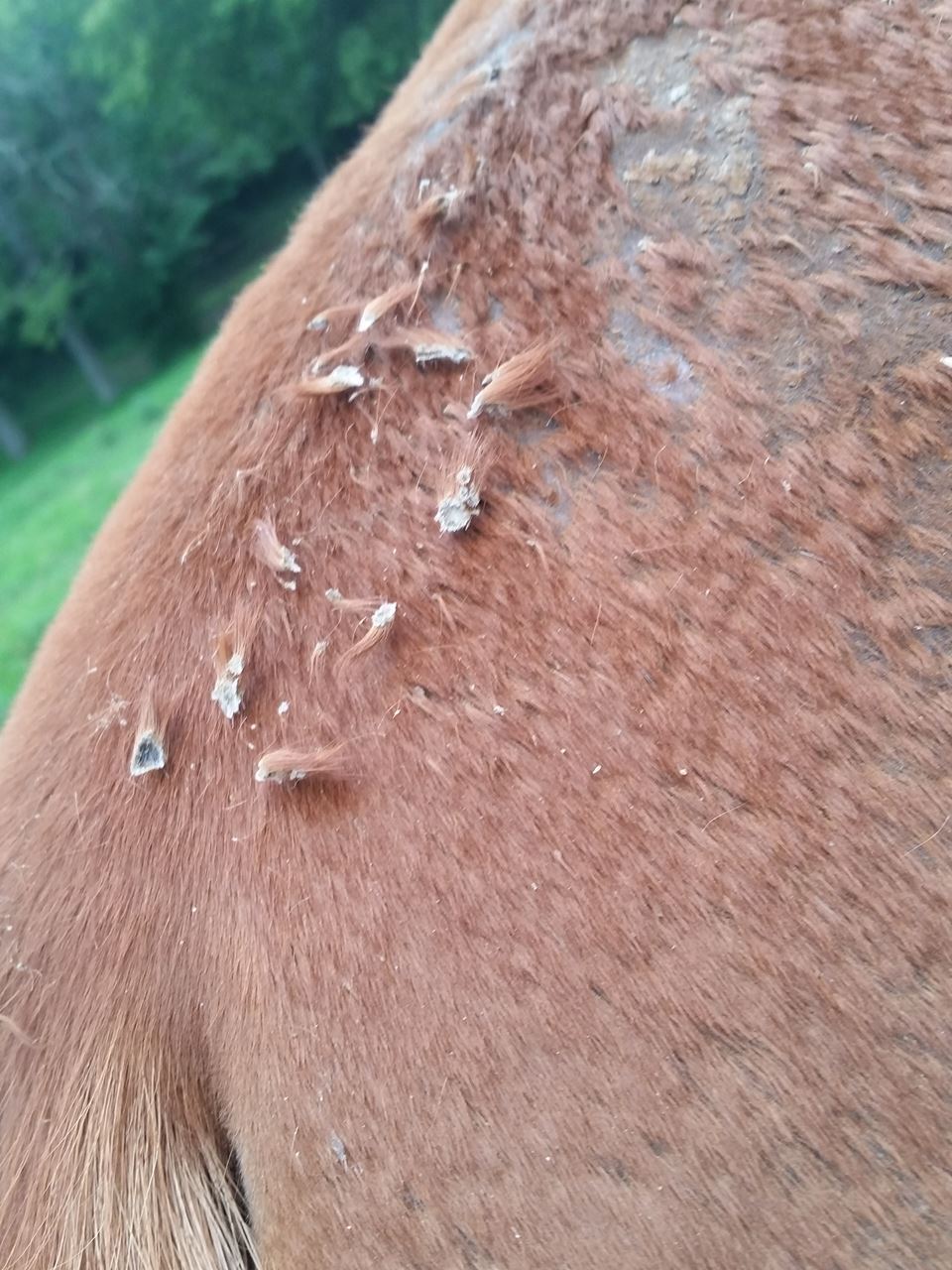 (Photo credit: mseda.org)
As we leave behind one of the
wettest years on record for NC, chances are you have at least heard the term
rain rot over the last few months. Rain
rot, aka dermatophilosis, is a skin condition that affects horses housed primarily
outside. The condition is often mistaken
for a fungal infection but is actually caused by the bacteria, Dermatophilus
congolensis. The bacteria lives dormant
on the skin of horses and under normal conditions is benign, but when the skin
becomes rain soaked or broken by either trauma or insect bites, it is more
likely to develop into the condition. A
heavy winter hair coat is more likely to hold moisture close to the skin,
causing anaerobic (lacking oxygen) conditions and exacerbating the condition.
Rain rot can usually be diagnosed
by visual inspection. The hair coat will
be in matted tufts from neck to hindquarters with lesions on the skin
underneath. Sometimes the legs will be
affected as well. If not treated promptly,
the lesions will grow and create scabs with yellow-green pus under them when
removed. Any hair attached to the scabs
may come off as well.
Treatment starts with removing the
crusty scabs to expose the infected skin to oxygen. Scab removal is usually done by bathing the
affected area in some type of antimicrobial soap (Betadine, Chlorhexidine,
etc.) and gently removing the scabs with a brush or curry comb. In severe cases, antibiotic treatment may be
required. After the skin is cleaned and
scabs removed, it is important to keep the skin dry by either housing the horse
in a barn, or if that is not possible putting on a weather proof blanket, although
this method is not preferred because it limits the amount of oxygen reaching
the skin.
Rain rot is highly contagious so
good sanitary practices should be used if you have an infected horse on your
farm. It can be transferred through
brushes, tack, and even by insects so cleaning equipment and tools and isolating
the infected horse is important in keeping this infection from spreading. You should also never share blankets between
an animal that you suspect is infected with other animals. Wash hands thoroughly after handling the
infected horse.
Mild to moderate cases of rain rot
should clear on their own, but all cases should be treated to prevent the
infection from worsening or from spreading to other horses. If you suspect your horse has a case of rain rot
and antimicrobial treatment is not effective, contact your veterinarian.
Monday, January 7, 2019
Wet Weather and Hooves
 No matter the species, wet weather can wreak havoc on
hooves. All this rain can lead to
excessive mud. And horses that stand
and/or walk in a lot of mud can have more problems with diseases like thrush
and seedy toe, also known as white line disease. Additionally, horses that stand in mud can
develop “scratches” or “greasy heels”, which is similar to what happens on the
body with rain rot.
Clean mud from the hooves every day and consider applying a
thrush medication once or twice daily.
Soft hooves on horses don’t hold nails well which can lead
to loose shoes which can lead to lost shoes. Have horses stand in a dry area
for several hours during the day or night.
Stalling with shavings, sawdust or straw can help pull some moisture out
of the hoof.
Here are some links that may provide some additional
information.
https://www.canr.msu.edu/news/scratches_in_horses
https://extension.psu.edu/horse-wet-weather-woes
If you have specific areas of the pasture that hold water,
you may need to consider grading work to improve drainage or other means to try
and eliminate these problem areas.
(Photo credit: thehorse.com)
Subscribe to:
Posts (Atom)